finishing
Mead Architecture: Tannins in Mead Making
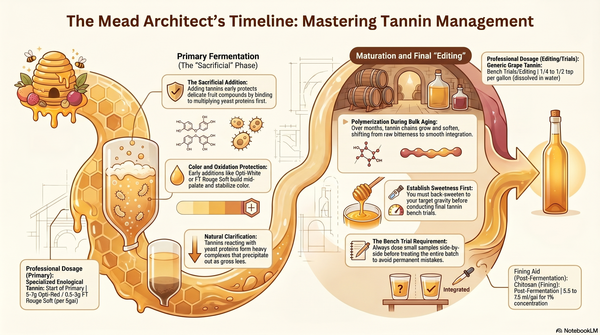
Honey is generous. It gives you sugar; it gives you aroma; it gives you that ineffable floral complexity that makes mead worth making. What it doesn't give you is structure. No tannins. None. Zip.

finishing
Honey is generous. It gives you sugar; it gives you aroma; it gives you that ineffable floral complexity that makes mead worth making. What it doesn't give you is structure. No tannins. None. Zip.
Mead
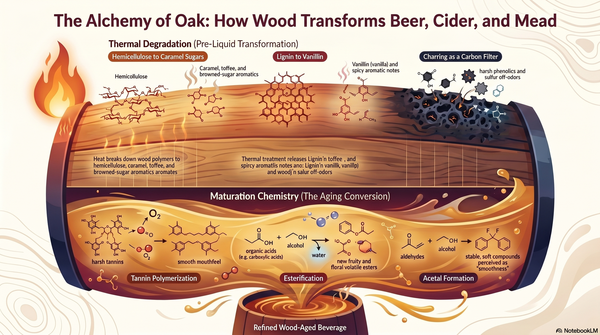
There's a moment in every barrel-aged batch where something clicks. The harsh, tannic edge softens. The fruit comes forward. A faint vanilla warmth settles into the background like it was always there. You didn't add vanilla. You didn't add anything — you just waited, and the wood did the work.
Honey
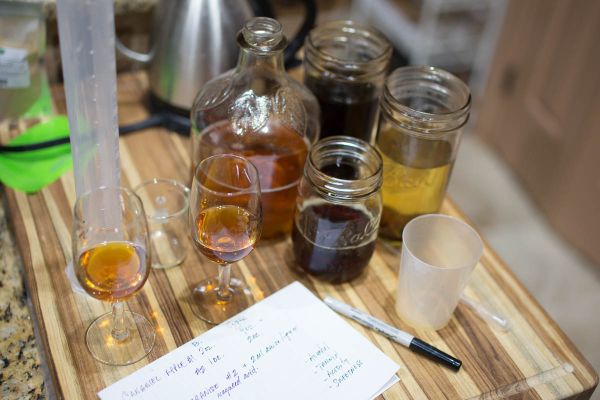
Racking and finishing your mead can be complicated, but is simple if you can put together a plan. In Mead, Part 2, I laid out a simple mead recipe and gave instructions and recommendations for making and fermenting your must. Let's recap. * Hopefully, you have had the chance
Experiment
I was cruising through Facebook the other day, and the ebullient Malcolm Frazer (one of the Brülosophy crew) posted a picture of tea brewed with tap water and with distilled water. It was a tremendous example of the effects of alkalinity and the extraction of tannins (polyphenols) from plant matter.