finishing
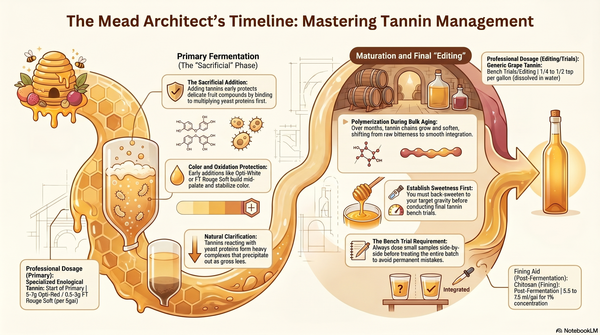
Mead Architecture: Tannins in Mead Making
Honey is generous. It gives you sugar; it gives you aroma; it gives you that ineffable floral complexity that makes mead worth making. What it doesn't give you is structure. No tannins. None. Zip.

finishing
Honey is generous. It gives you sugar; it gives you aroma; it gives you that ineffable floral complexity that makes mead worth making. What it doesn't give you is structure. No tannins. None. Zip.
Experiment
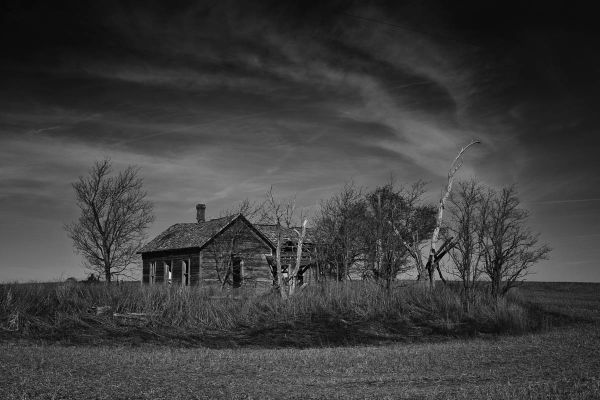
The Farmhouse I set out in October of 2015 to redefine my understanding of Farmhouse Ales in a more personal way, connecting to my heritage in agriculture. While a bit narcissistic, this was inspired by visiting my family's homestead in Smith County, Kansas. I have since been back
competition
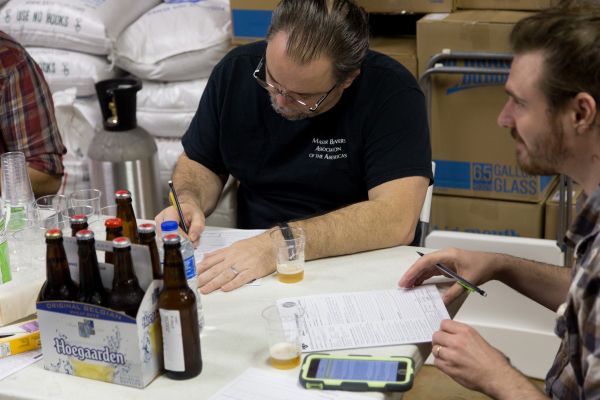
I have completed the BrewUnited Challenge 2015, Balanced Division activities. It occurs to me there are some lessons to be learned from peeking behind the scenes and getting a sense of what really goes into such a thing. So here is a quick summary, with a few comments that should
Brewer's Notes
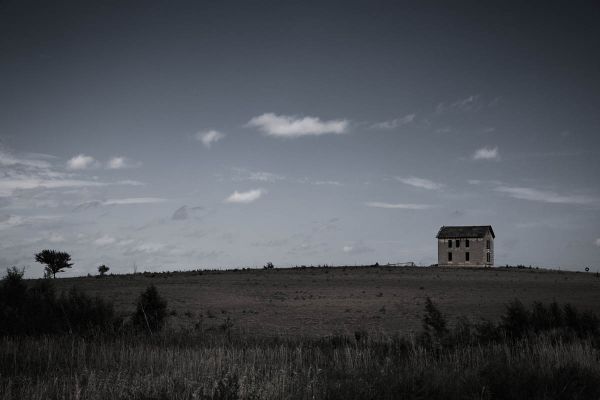
Much of my childhood was spent around agriculture, and Northern Kansas has a wonderful history. From pioneers (Little House on the Prairie) to brave farmers that worked the soil through the Depression, the Dust Bowl and two world wars, my mother's German family has very deep roots in
Experiment
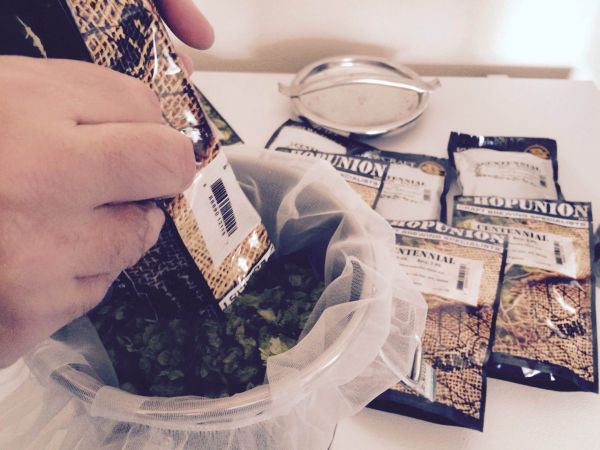
Well, the jury is in on this first stage experiment. Fail. Crash and burn... In the spirit of honesty the beer sucked. This is all hop flavor soup and way too much sweetness. A lesson in the need for balance, especially bitterness. Tastes like overly back sweetened Bud soaked in
Rambling
For those that don't know, a SMaSH beer is a single malt, single hop beer and a perfect vehicle to really get to know a new hop variety. I have gotten very lucky so far with Nelson Sauvin, using it in a previous recipe called Saison Du Sauvin.
Rambling
I have been following Stan Heironymous religiously since "Brew Like a Monk" was released, including his blog, Appelation Beer. A very common theme is understanding Beer From a Place, and how we consistently misunderstand the point when inundated with marketing, beer styles and myths (see marketing). So, in
Rambling
A simple tasting description: Tastes like a saison... lots of spice and phenolics. Orange and other spices are in the background. Mouthfeel is light to medium. Love the foam and the spritzy finish. This is a fairly classic saison and sessionable with just a little alcohol at 6%. I think
Brewer's Notes
Returning briefly to water, I thought a nod toward a simple approach that yields good results is to take a direct look at AJ deLange's A Brewing Water Chemistry Primer on homebrewtalk.com. This makes fairly straightforward recommendations with a few "exceptions" that I will paraphrase
Rambling
Not sure what I was thinking about dual tasting notes of such widely varying beers. First is the Tripel Triple, a very malty tripel brewed with mexican piloncillo sugar that added a very nice touch. Second is the House APA - my house calibration American Pale Ale, brewed with high levels
Brewer's Notes
Palmer and Kaminsky, as well as AJ deLange and Martin Brungard, have lately laid out arguments that largely debunk the sulfate/chloride ratio as only effective within a certain range of amounts of ions. This makes sense, as concentration (ppm) of a given mineral drives to a flavor threshold, and
Brewer's Notes
I thought it might be nice to revisit these tasting notes over time. You may recall the early tasting when this strong saison was still very green. In just a few weeks lagering, this has really turned a corner. Below, I will mark the previous comments as ET (Early Tasting)