The Lab-First Series: Calibrating the Human Instrument
A guideline to using Sensory and the Lab to troubleshoot or verify common brewing issues.

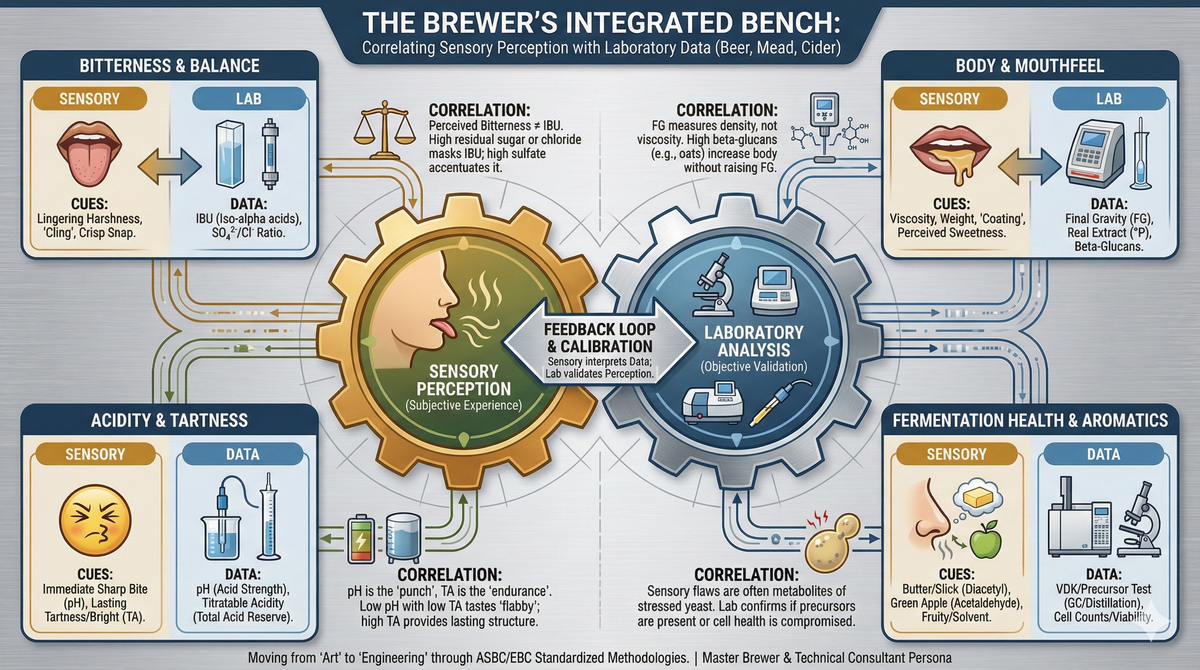
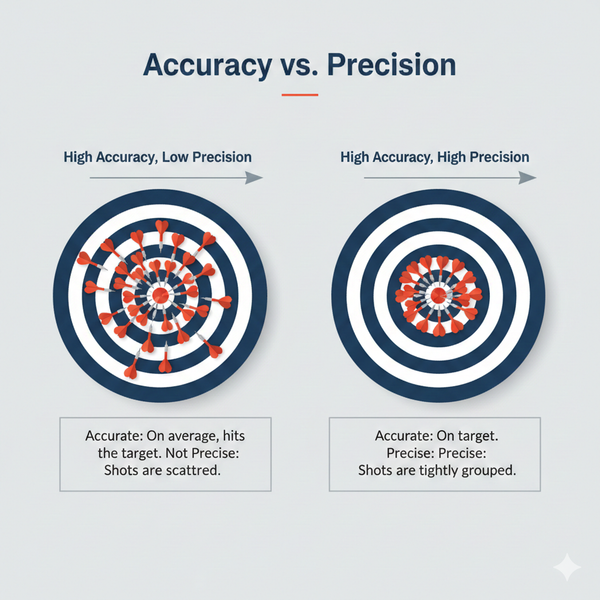
In a high-precision brewing environment, we often treat laboratory data and sensory perception as two distinct silos. We rely on the lab for objective validation and the palate for subjective experience. However,makers should recognize that the human palate is simply another piece of analytical equipment—one that is highly sensitive but prone to significant "sensor drift" without regular calibration.
The Lab-First philosophy dictates that we use analytical data to define the boundaries of our process, while utilizing sensory analysis to interpret the chemical interactions within those boundaries. When we bridge the gap between sweetness and residual sugar, we move from making a beverage to engineering a sensory experience.
Standardizing the Subjective
To turn a "taste" into "data," we must move away from poetic descriptors and toward a standardized lexicon. The brewing industry relies on peer-reviewed methodologies—specifically ASBC Sensory-1—to ensure that a "citrus" note is not a matter of opinion, but a repeatable, quantifiable observation.
The Analytical Matrix: Professional Standards vs. Lab-First Bench Hacks
Where large commercial regional breweries have access to Gas Chromatography and Spectrophotometry, the "Lab-First" home scale utilizes scientific principles to achieve similar validation with accessible hardware. I'd suggest picking one and giving it a try. These are also useful in bench trialing and blending.
| Characteristic | Sensory Cues (Perception) | The Bench Hack (Lab-First Method) | Professional Standard |
|---|---|---|---|
| Bitterness | Lingering harshness or "clinging" | Comparison Bench Trial: Dilute a known standard (e.g., Sierra Nevada PA) to calibrate your IBU perception. | ASBC Beer-23 (Iso-octane) |
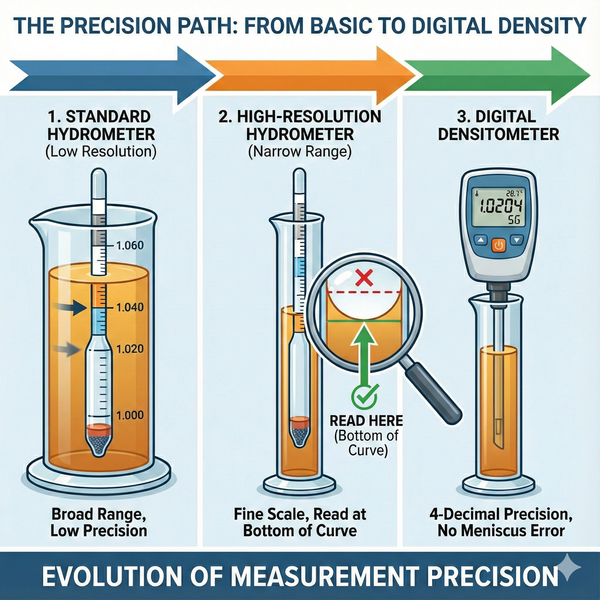
| Body / Extract | Mouth-coating, viscosity | Hydrometer + Refractometer: Use the "Wort Correction Factor" to determine real vs. apparent attenuation. | ASBC Beer-2 (Density Meter) |
| Acidity (Strength) | Immediate sharp "bite" | ATC pH Meter: Standardize to with a 2-point calibration (4.0/7.0). | ASBC Beer-9 (pH) |
| VDK (Diacetyl) | Butter, slickness, popcorn | Forced Diacetyl Test: Seal a sample, heat to () for 15 min, cool, and sniff against a control. | ASBC Beer-25 (GC-FID) |
| Acetaldehyde | Green apple, latex paint | Forced Fermentation: Over-pitch a small sample on a stir plate at to check for complete precursor conversion. | ASBC Beer-26 |
| Micro Stability | Unexplained haze, acetic notes | Phase-Contrast Microscopy: Use a hemocytometer to check for non-Saccharomyces morphology. | ASBC Microbiological Control |
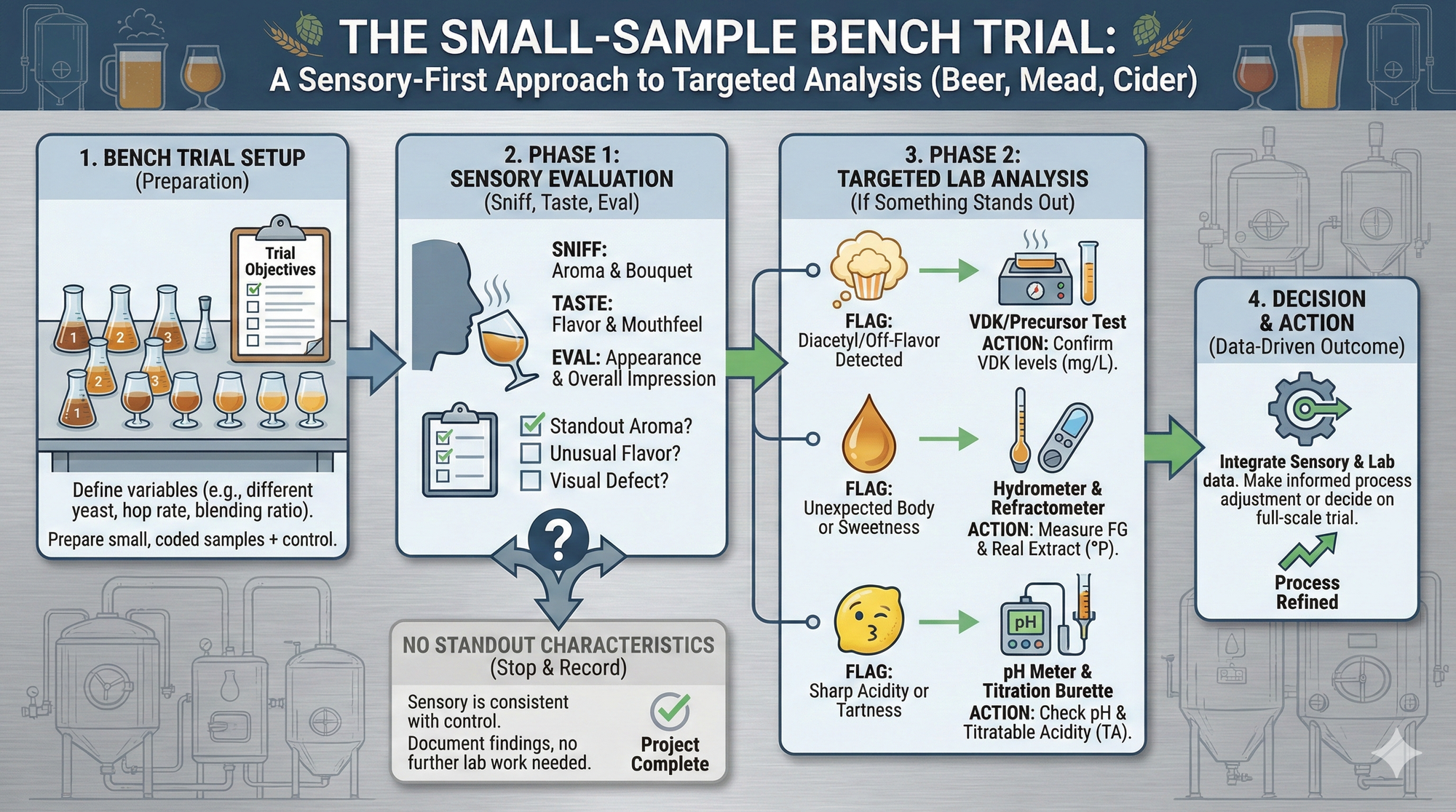
Avoiding the "Anecdotal Trap"
The Anecdotal Trap is the most common failure point in the transition from hobbyist to technical brewer. It occurs when we allow subjective experience or "homebrew lore" to dictate process changes without empirical proof.
The BJCP vs. The Lab: A Hierarchy of Evidence
While programs like the BJCP (Beer Judge Certification Program) provide excellent training for identifying styles, they are "consumer-facing" models. They identify what is there, but not necessarily why. To use this feedback technically, we must first validate it as a data point.
If a judge identifies "astringency" in your West Coast IPA, the Lab-First response is to consult the data:
- Establish a Baseline of Significance: Do not react to a single judge's comment. Aggregation is key. Are you seeing "astringent" or "harsh" on multiple sheets from different judges? More importantly, is this feedback consistent across multiple competitions? Only when you have a statistically significant consensus of feedback do you have a "problem" worth troubleshooting in the lab.
- Consult the Mill Log: Check your MonsterMill gap settings. Was it at your standard ? If the gap is verified and the RPM was controlled via your motor controller, the crush (husk integrity) likely isn't the culprit.
- Verify Sparge Temp: Did the manual control on the Sabco BrewMagic allow the sparge water to exceed ()? This is a primary driver for tannin extraction.
- Perform a Triangle Test (ASBC Sensory-7): Pour three samples (two control, one variable). If a blinded panel cannot statistically identify the "odd beer out," the astringency may actually be a perceived byproduct of high sulfate levels () rather than a mechanical process flaw.
Technical Note: Expectation bias is the "ghost in the machine." If you know you spent $40 on experimental hops, your brain will "find" those aromatics. Professional methodology demands Blinded Sensory Analysis to sideline the ego of the brewer.
Technical Literature & Credible Sources
To maintain a "Lab-First" environment, your internal library should include the same standards used by the MBAA and ASBC.
- ASBC Methods of Analysis: The definitive source for sensory protocols. Sensory-7 (Triangle Test) is the most powerful tool for any brewer with three identical glasses and a desire for truth.
- Kunze, Wolfgang (Technology Brewing and Malting): The definitive text on how brewhouse parameters (like mash pH and thermal load) directly influence flavor stability.
- Meilgaard, M.C., et al. (Sensory Evaluation Techniques): Establishes the concept of the Flavor Unit (FU)—the ratio of a compound's concentration to its sensory threshold. This explains why can taste "softer" in a high-gravity stout than in a light lager.
Conclusion
The laboratory provides the guardrails of consistency and chemical reality; it tells us if we hit our targets. Sensory analysis, when performed with the rigor of ASBC/EBC standards, determines if those targets were worth hitting in the first place.
When your lab results and your sensory panel consistently align, you have achieved true process mastery. Stop brewing by "feel" and start brewing by data.